
Is Your Wine Suitable
for Dealcoholization?
Why some wines retain structure, aroma, and balance better than others when alcohol is removed.
A practical pre-check for wineries before moving into testing, development, and non-alcoholic wine production.
Not every wine responds to dealcoholization in the same way.
Some wines retain structure, aroma, and balance surprisingly well. Others lose body, become flat, or reveal weaknesses that were less obvious before alcohol was removed.
The difference is not random. It depends on the starting wine: its aromatic intensity, acidity, mouthfeel, balance, and overall cleanliness.
This pre-check is not a replacement for controlled testing. It is a practical way to identify obvious risks before moving into product development.
For the full technical background, see how wine dealcoholization works.
Why Some Wines Perform Better Than Others in Dealcoholization
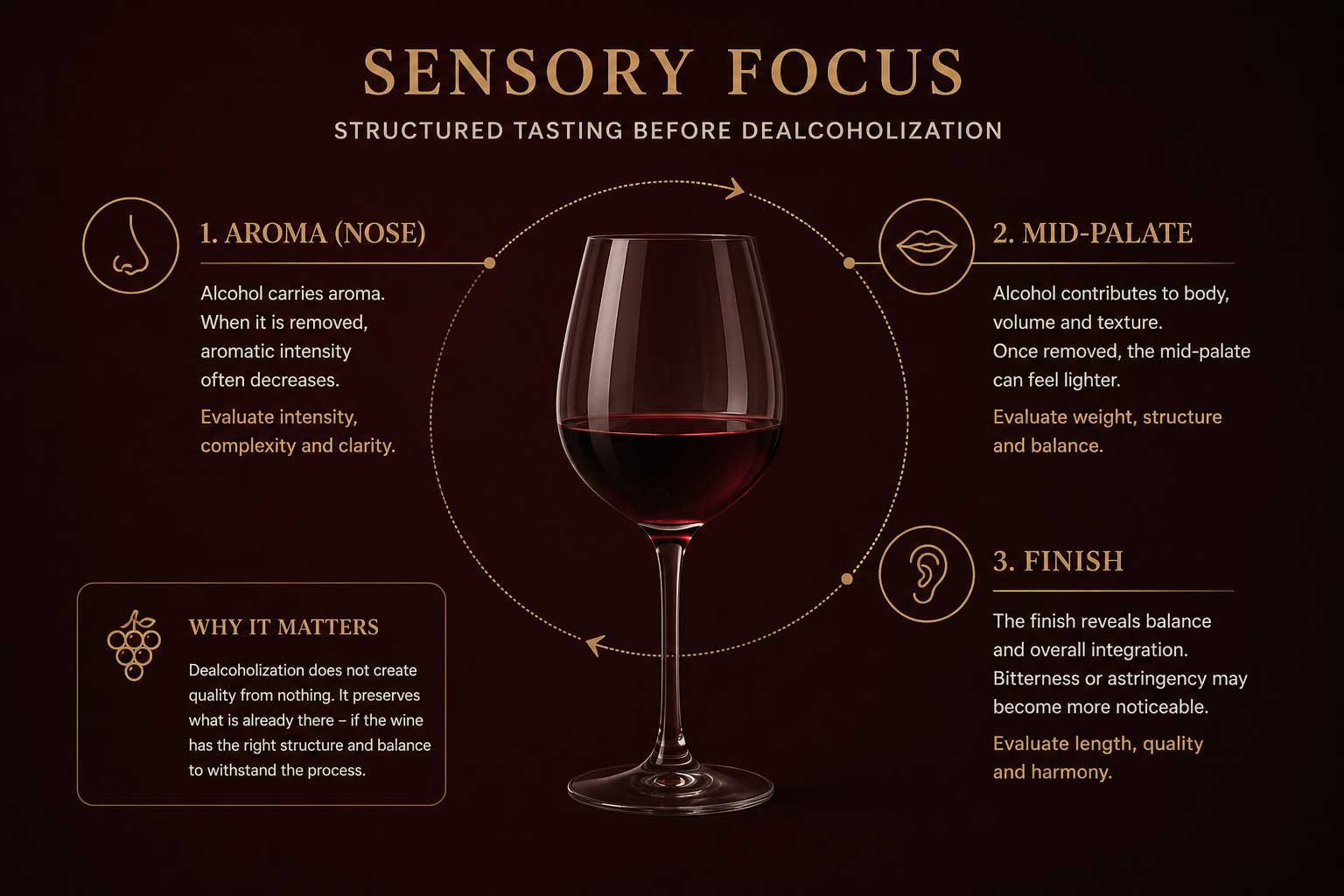
Alcohol is not just something that can be removed from wine without consequences. It plays a structural role. It contributes to body, carries aroma, affects mouthfeel, and helps hold acidity, sweetness, bitterness, and tannin in balance.
When alcohol is removed, that balance changes. Aromas may become less expressive. The mid-palate can feel lighter. Acidity may become more exposed. Bitterness or astringency can become more noticeable. A wine that felt balanced at full alcohol may not feel balanced after dealcoholization.
This is why the question is not simply whether a wine is “good”. The better question is whether the wine has enough structure, freshness, aromatic expression, and balance to remain convincing after alcohol has been reduced or removed.
In practice, many unsuccessful non-alcoholic wine projects begin with unrealistic assumptions about how wines behave after processing. Strong base wine quality matters, but development strategy, positioning, testing, and technical expectations also play a major role.
If you want to understand the most common development and commercialization mistakes, read: why some non-alcoholic wine projects fail .
Dealcoholization does not create quality from nothing. It works best when the base wine already has enough character and structure to survive the loss of alcohol.
A Structured Sensory Pre-Check Before Dealcoholization
You don’t need laboratory data to identify obvious risks. But you do need a structured way to evaluate how your wine is likely to behave once alcohol is removed.
This pre-check is based on sensory evaluation — not guesswork. It helps you understand whether your wine has the necessary structure, balance, and intensity to withstand dealcoholization.
How to approach tasting
- Taste the wine slightly warmer than usual
- Avoid food pairing during evaluation
- Focus on aroma, mid-palate, and finish
- Pay attention to mouthfeel and structure
Sensory evaluation criteria
Evaluate your wine across the following five factors. Each one directly influences how the wine will behave after alcohol removal.
- Aromatic intensity – how expressive and layered the wine is
- Acidity – freshness and tension in the wine
- Structure – body, tannin, and overall weight
- Balance – how well all components integrate
- Faults – presence of oxidation, reduction, or instability
This pre-check does not predict the final result. It identifies whether the wine is a strong candidate for further testing.
Sensory Pre-Check: How Will Your Wine Behave Without Alcohol?
Evaluate your wine across the five key factors below. Each one determines how well the wine can retain structure, aroma, and balance after dealcoholization.
Aromatic Intensity
Aromas typically become less expressive after alcohol removal. Wines that start neutral often become flat.
- 2 — expressive, layered, clearly defined
- 1 — moderate intensity
- 0 — neutral or weak
Acidity
Acidity becomes more exposed once alcohol is removed. It plays a key role in freshness and balance.
- 2 — vibrant, fresh, structured
- 1 — balanced but not pronounced
- 0 — soft, flat
Structure (Body / Tannin)
Alcohol contributes directly to body. Removing it reduces weight and mouthfeel.
- 2 — strong structure, good grip
- 1 — medium body
- 0 — thin, lacking weight
Balance
Dealcoholization amplifies imbalance rather than correcting it.
- 2 — well integrated
- 1 — minor imbalance
- 0 — clearly unbalanced
Faults
The process does not remove faults. Any existing issues will remain or become more noticeable.
- 2 — clean wine
- 1 — minor imperfections
- 0 — clear faults present
Quick Interpretation
- 8–10 — strong candidate
- 5–7 — requires development
- 0–4 — high risk starting point
Why This Pre-Check Is Not Enough
A sensory pre-check can identify obvious risks. It cannot predict the final result.
Even wines that appear strong on paper can behave differently during dealcoholization. Small changes in alcohol level, aroma volatility, acidity, bitterness, and mouthfeel can shift the final balance more than expected.
This is where assumptions become dangerous. A wine may score well in tasting, but still require adjustment after alcohol removal — through blending, balance correction, or process refinement.
Process settings also matter. Temperature, vacuum conditions, flow, residence time, and target alcohol level all influence the outcome. For a deeper explanation of the technical side, see wine dealcoholization technology.
What Serious Producers Do Next
They don’t rely on assumptions. They test.
Once a wine passes the basic sensory check, the next step is controlled dealcoholization on a small scale. This allows producers to observe how the wine actually behaves once alcohol is reduced or removed.
The first result is rarely final. Adjustments are usually required — blending, structure correction, or fine-tuning of process parameters. This is not a single test, but a short development cycle.
The goal is not just to remove alcohol. The goal is to build a wine that still works — in aroma, structure, and overall balance.
This is where many projects succeed or fail. The difference is not the process itself, but how systematically it is applied.
Learn more about developing a complete product in non-alcoholic wine production.
See How Your Wine Actually Performs
A structured pre-check can highlight potential. Only real testing shows the outcome.
If your wine shows promise, the next step is simple: test it under controlled conditions and see how it behaves once alcohol is removed.
This is where assumptions end and product development begins.
Frequently Asked Questions
Is every wine suitable for dealcoholization?
No. Some wines retain structure, aroma, and balance after alcohol removal, while others become flat or unbalanced. Suitability depends on the wine’s initial characteristics, not just the process.
What makes a wine a good candidate for dealcoholization?
Wines with strong aromatic intensity, good acidity, solid structure, and overall balance tend to perform better. Wines that are already neutral, thin, or unbalanced usually struggle after alcohol removal.
Can I determine suitability without laboratory testing?
A structured sensory pre-check can help identify obvious risks. However, it cannot predict the final result. Controlled dealcoholization testing is required to understand how the wine will actually behave.
Does dealcoholization change the taste of wine?
Yes. Alcohol contributes to aroma, body, and balance. Removing it alters these elements, which is why some wines maintain quality better than others. For a deeper explanation of the process itself, see how wine dealcoholization works.
Can dealcoholization fix problems in a wine?
No. The process does not remove faults. In many cases, it makes existing issues more noticeable. The quality of the base wine remains critical.
What is the next step after evaluating a wine?
The next step is small-scale testing under controlled conditions. This allows producers to observe real changes and begin developing a balanced final product. Learn more about this process in non-alcoholic wine production, or explore the cost of dealcoholization before moving forward.